

Signal System Operations
When the railroad was first constructed, a signal system from Grand Scales Railroad Systems was installed around the upper loop. The design was based upon sensors in between the rails that picked up the train passing over. While this type of signaling has worked fairly well on other railroads, there were concerns from the very beginning as to whether this would provide adequate safety for a railroad of this magnitude. Before the system was fully installed, plans were being made to backup the sensor system with "fail safe" track detection based on standard gauge in a few of the more dangerous locations.
Ozark Mountain Tunnel
The 800 foot long Ozark Mountain Tunnel is the most dangerous location on the railroad. Double track on both sides go to single track through the tunnel. Any kind of signaling and operations through this area had to be absolute and reliable. A sensor system only records motion at each end of a block and does not "fail safe". In standard gauge practice, the train or a single car triggers the track detection anywhere in the block and everything is designed to go red if any component fails. With a blind tunnel, this was the only way to make it safe enough for multiple trains to operate on this railroad.
Merrick Locomotive Works has a slick design that they adapted from a full-size system which would have worked fine all by itself. However, John Woods wanted the switches at both ends to throw automatically. With this requirement, the project went from just signaling to a fully operational ABS (Absolute Block System) controller. This could have been accomplished prototypically like the Merrick train detection; however, we decided to make some compromises. As they did in the old days, we could have wired and controlled everything through heavy-duty railroad relays. This would take a lot of wiring and maintenance to build and operate. We decided to do it the modern way, use the Merrick system for train detection and a programmable logic controller (PLC) to run the rest of it. Ours just isn't as hardened and durable as the big railroads use but costs a lot less money. The PLC still piggybacks on the track detection relays to maintain the fail-safe requirement.
We've had a few bugs to work out but the system has worked reliably since it was installed in the summer of 2007. When a train enters the approach block from either side of the tunnel the system checks to make sure everything is clear to line the switches for that direction of travel, gives the approaching train a clear indication, and gives red signals on all other tracks. After the first train passes through the tunnel the controller will then allow a trailing section to pass or will clear a train going the other direction, moving switches and changing aspects automatically as required. If anything fails or does not happen as it is supposed to, all lights will go red.
Upper Loop System
In June of 2008 it was decided that the sensor system was not going to work, it was eliminated. We are re-using most all of the signal heads and interlocking wires to install the same bonded rail system for train detection as Ozark Tunnel and using all hard wire relay logic which will give us full ABS on the railroad. In February of 2012 all the interlocking was completed on the upper loop giving red, yellow, and green indication going in the normal flow of traffic and only red and yellow indication when moving against the normal flow. At some point and time we will get the Upper Loop interlocked with Ozark Mountain Tunnel which will include a full signal bridge and two miniature semaphore signals.
Signals on the ATT&NW
Click photos for larger version
| Located at the electric gate entrance indicating gate position two General Railway Signal Company Type D 3 light vertical signals. | 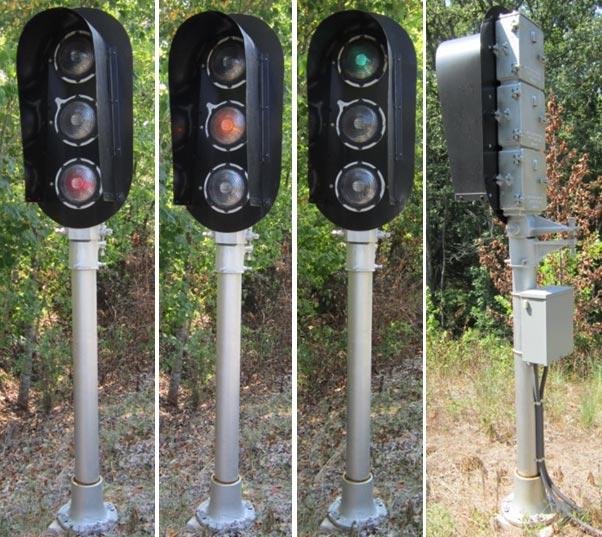 |
| General Railway Signal Company Type G tri light located close to the shop for show. | 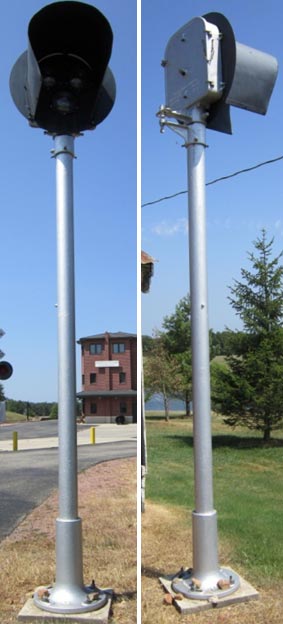 |
| Main yard and shop crossing gates Western Railroad Signal Type 3564 from 1948. | 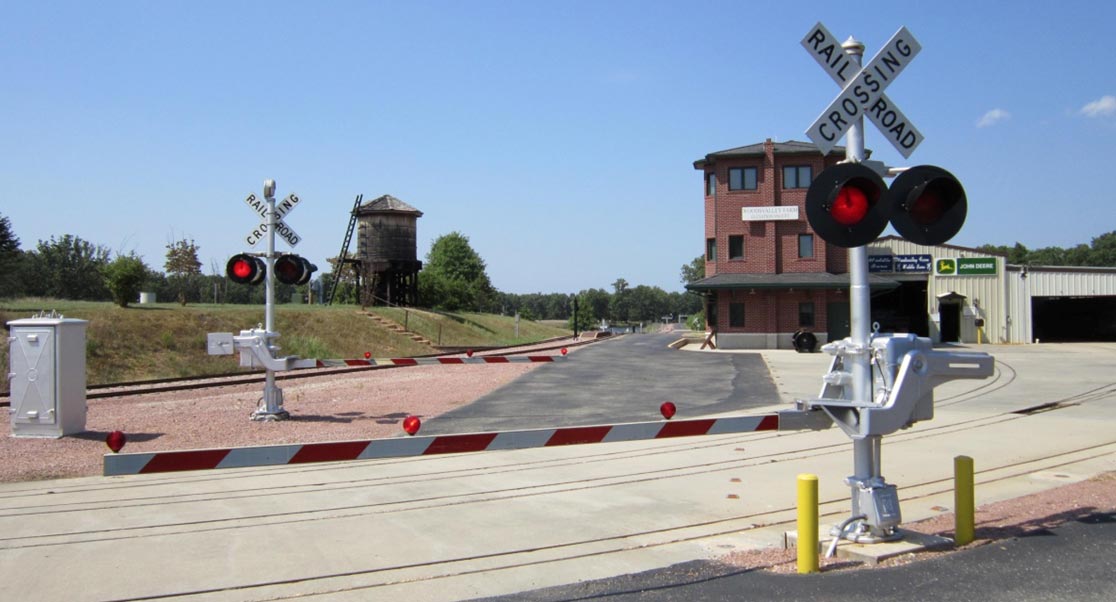 |
| Union Switch and Signal Company Style N-2 2 light dwarf for switch point indication located at the inner loop lead switch. | 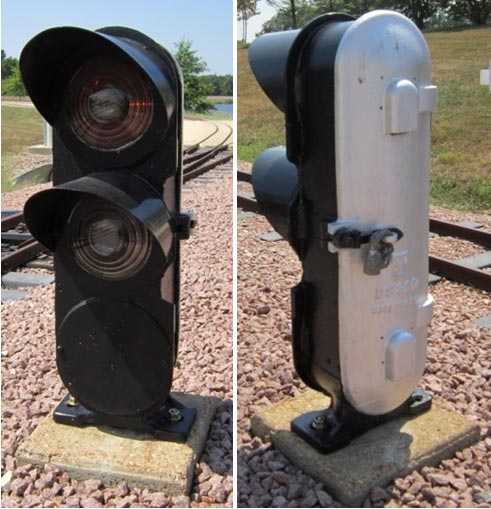 |
| Union Switch and Signal Company Style H2 search lights for switch point indication at inner loop lead switch and track indication in the car barn. | 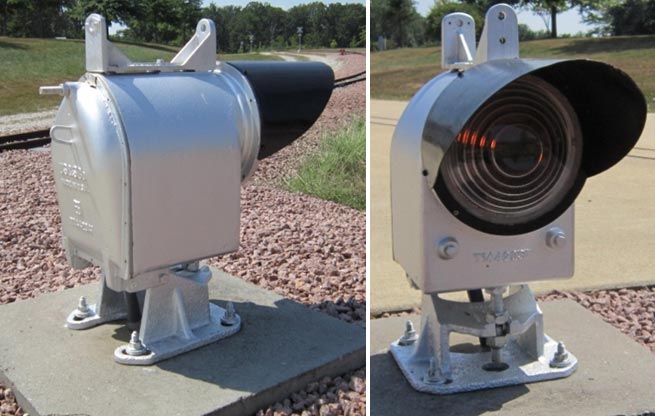 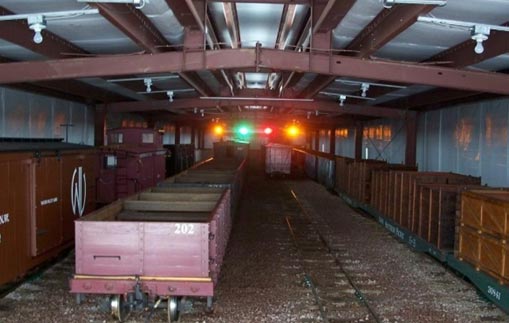 |
| Grand Scales Signals 2 light dwarf for switch point indication around the upper loop main. |  |
| Grand Scales Signals T- Bridge with tri lights and 2 light verticals for track/switch indication between main 1 and main 2 on the upper loop. | 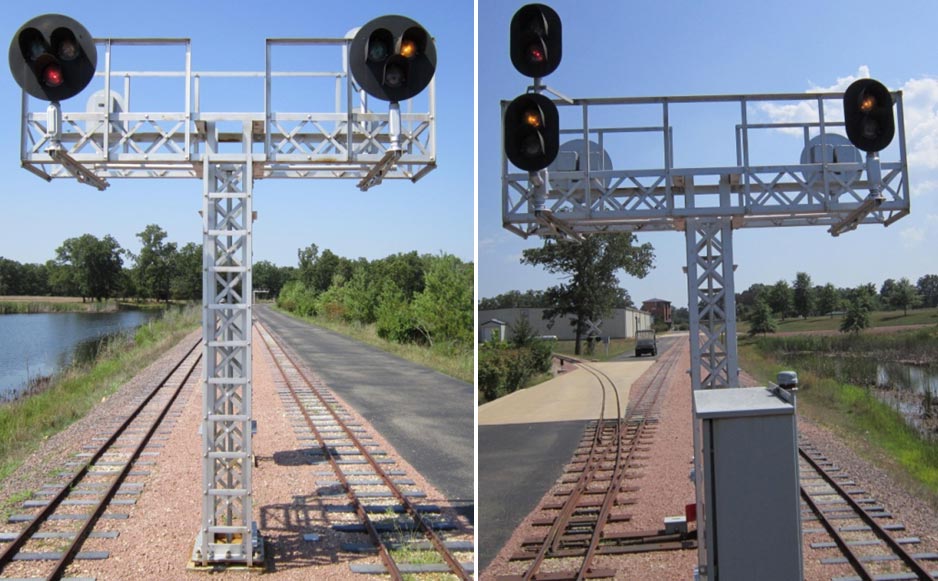 |
| Scales Signal Grade crossing at lead to the warehouse. | 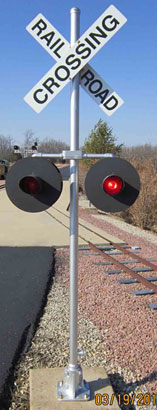 |
| Grand Scales Signals Cantilever bridge with tri lights and 2 light verticals for track/switch indication for main 1 and main 2 on the upper loop near Ridge Road Wye. | 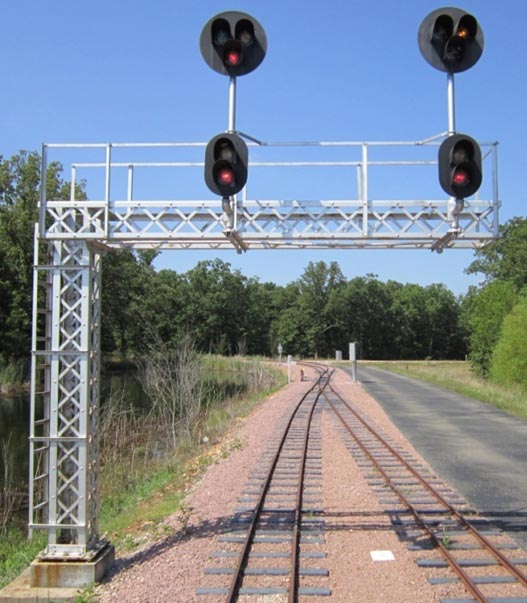 |
| General Railway Signal Company Type VA Dwarf CPL (color position light) with markers for track/switch indication at Ridge Road Wye and Woodsvalley Wye. |  |
| Roll Models Inc. Wig Wag Grade Crossing signal at Tower Ten Crossing on the upper loop. | 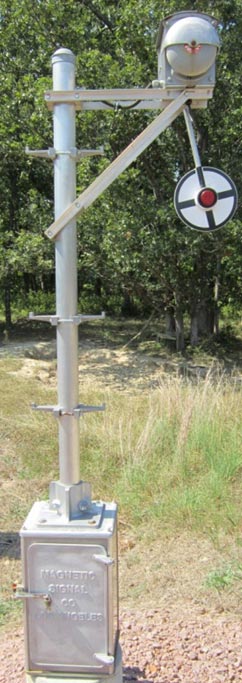 |
| Grand Scales Signals Tri lights, 2 light verticals, and 3 light vertical for track/switch indication on the Upper Loop main. | 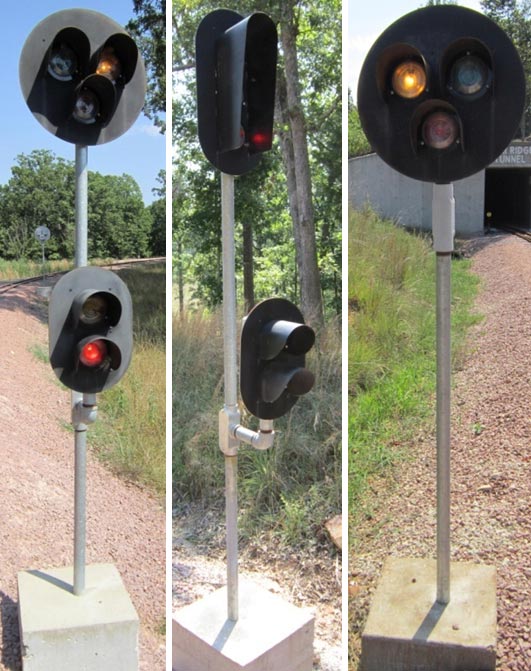 |
| Merrick Locomotive Works 3 light verticals for track/switch indication for Ozark Mountain Tunnel with automatic switches. | 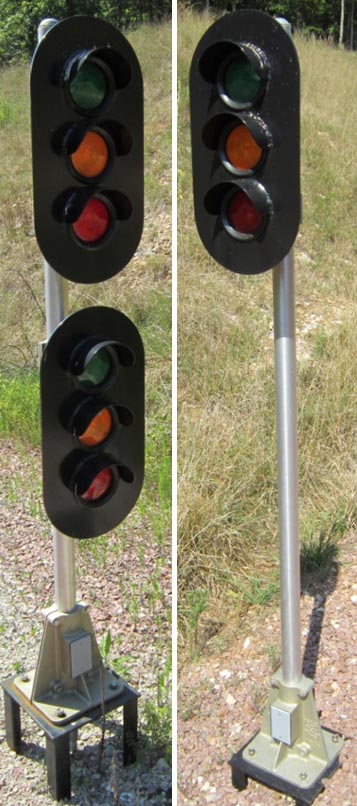 |
| Union Switch and Signal Company Subway Signal removed off a Chicago Transit Line in the 2000's. Signal was A45. It was reconfigured for switch point indication and block protection. |  |
| Western Railroad Signal Company Grade Crossings at Cedar Pond Road. | 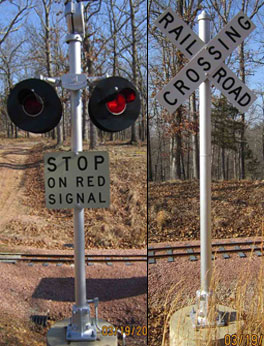 |
| Dwarf Semaphore located at main station operation as repeater signals for Deer Ridge Tunnel switch and track indication on Main 1 and Main 2. These signals came from the Grand Central Terminal (GCT) in New York City. They are custom made so that the blade would not touch the 3rd rail. They operate off 110VDC and date back to the 1910s. | 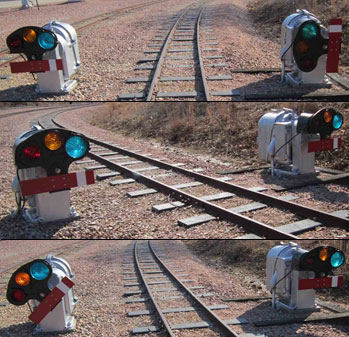 |
| Scratch built 2 Light Signal for switch point indication. | 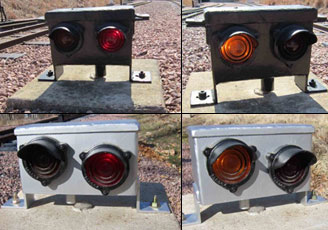 |
| General Railway Signal Search Light for switch point indication. | 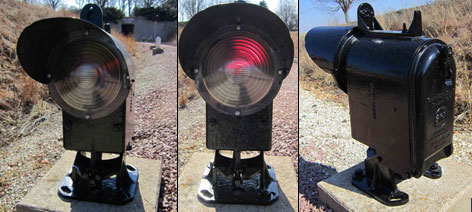 |
| Union Switch & Signal P2 2 Light Dwarf for switch point indication. | 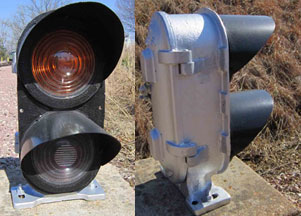 |
| Grade crossing signals at Miller Crossing the one on the right is a Western Railroad Signal Company Grade Crossings. The one on the left is a signal that was of Wabash Era and originally installed on a Wabash line in central Illinois. Originally the crossing lamps were attached to the STOP signal, but when removed from server the STOP signal part was damaged and was too brittle to have the lights reinstalled. This signal dates back to the 1930s. | 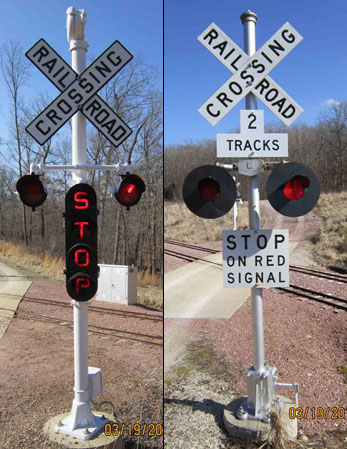 |
| Griswold Rotating Stop Sign located at River Road Crossing. This Griswold runs off Solar Panel attached to the crossing cabinet and is 100% relied on solar power. The crossing is activated by train detectors rather than track detection to save energy. When the track is clear the stop sign is turned away from traffic, when a train approaches the sign turns and faces traffic. This is a fail-safe device, if power or connection is lost the signal will fail-safe and display the stop sign. | 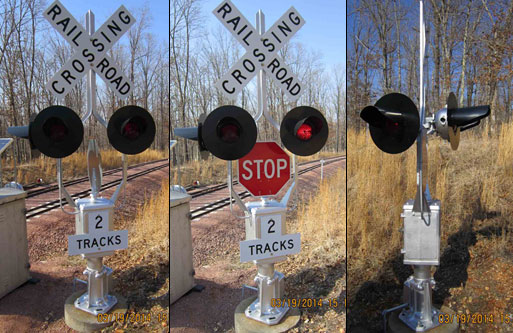 |
For more signal pictures from this railroad and others visit Zachary Gillihan's Railroad Signal Web site.
 Copyright © 2006- ATT&NW